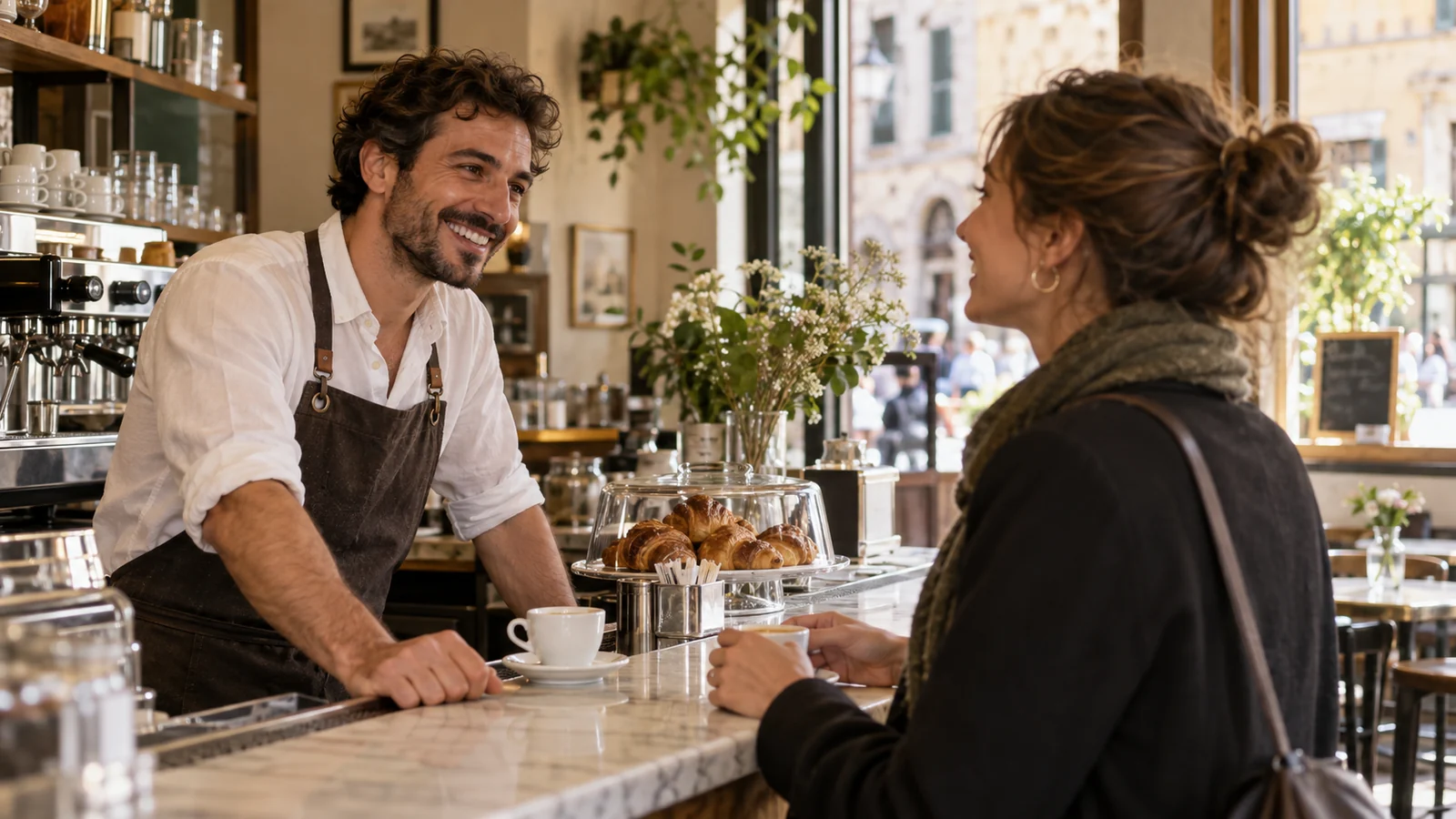
From booking a table to paying the bill-a complete guide to Italian restaurant phrases, dining customs, and food vocabulary for confident dining in Italy.
Why learn Italian restaurant phrases before visiting Italy?
Dining out is one of the central experiences of Italian culture. Italian restaurants-especially outside tourist hotspots-operate on Italian hospitality customs that differ significantly from other countries. Knowing the right phrases means you navigate mealtimes comfortably, avoid cultural misunderstandings, and connect with the experience on a deeper level.
Even basic Italian restaurant phrases improve your dining experience enormously. Waitstaff who see you trying to engage in Italian are typically more attentive, more willing to explain dishes, and more likely to make recommendations.
How do you book a table in Italian?
Reservations (prenotazioni) are essential at good Italian restaurants, especially on weekends. You can reserve by phone or in person with these phrases.
- Vorrei prenotare un tavolo per due / quattro persone. (I would like to book a table for two / four people.)
- Per questa sera alle otto. (For this evening at eight.)
- Per sabato a mezzogiorno. (For Saturday at midday.)
- A nome di… (In the name of…)
- Avete un tavolo libero? (Do you have a free table?)
- C'è posto senza prenotazione? (Is there space without a reservation?)
What do you say when you arrive at an Italian restaurant?
On arrival, greet staff with Buonasera (Good evening) in the evening or Buongiorno during lunch. Do not seat yourself at a table unless specifically told to-wait to be shown to your table.
- Buonasera. Ho prenotato a nome di… (Good evening. I have a reservation in the name of…)
- Siamo in due / tre / quattro. (There are two / three / four of us.)
- Possiamo sederci lì? (Can we sit there?) - pointing to a preferred table
- Potremmo avere un tavolo all'aperto? (Could we have an outside table?)
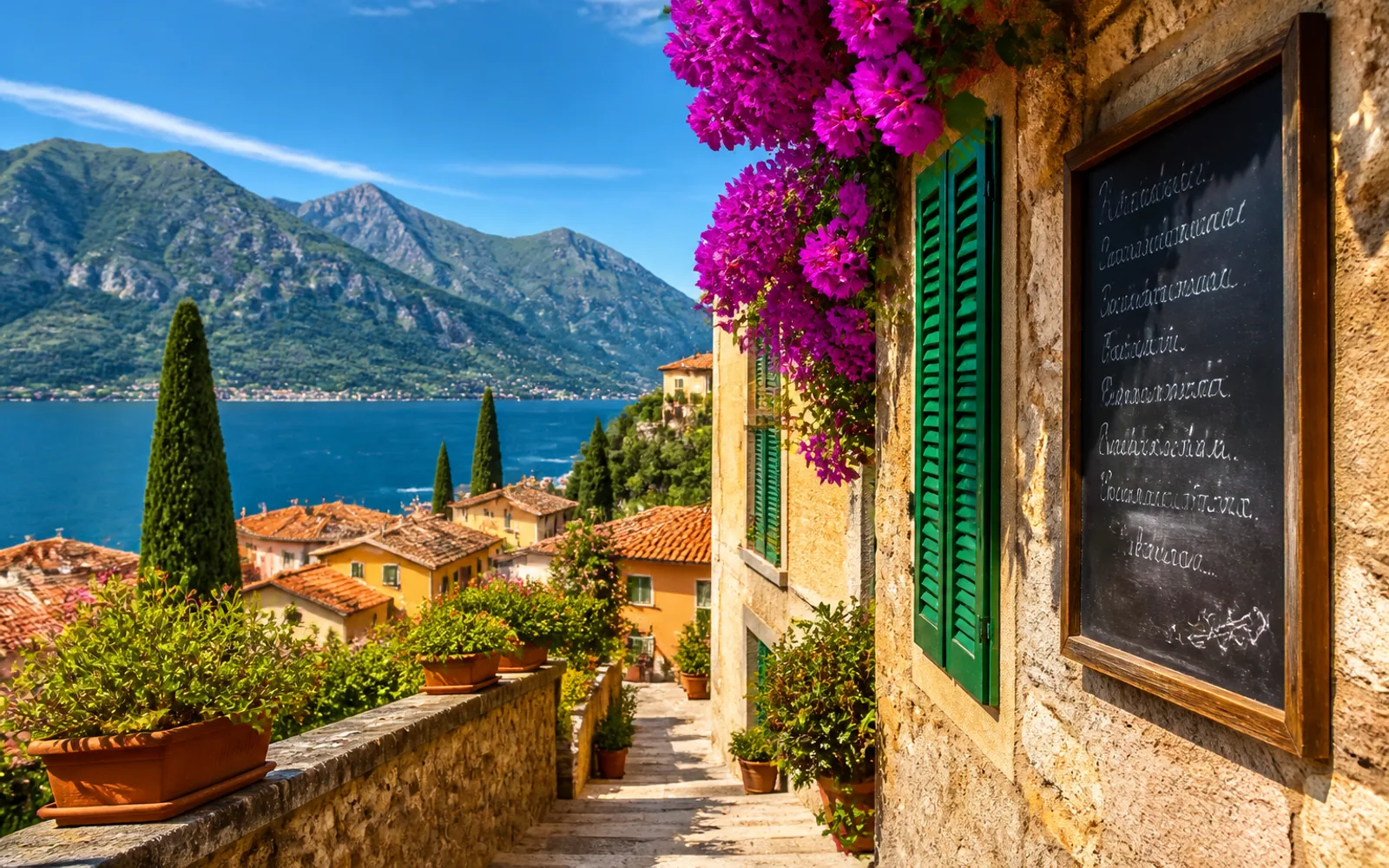
How do you order drinks and water in Italian?
Drinks are ordered separately from food, usually first. Italian restaurants always charge for water-specify still (naturale) or sparkling (frizzante / gassata). House wine (vino della casa) is usually excellent and economical.
- Un'acqua naturale / frizzante, per favore. (A still / sparkling water, please.)
- Un quarto di vino rosso / bianco della casa. (A quarter litre of house red / white.)
- Una birra alla spina. (A draught beer.)
- Avete vini locali? (Do you have local wines?)
- Un aperitivo, per favore. (An aperitif, please.)
What is the Italian meal structure you need to know?
Italian restaurant meals follow a traditional structure. You do not need to order every course-two courses is perfectly normal-but knowing the names prevents confusion when reading menus.
Italian restaurant meal structure
Course
Appetiser
Italian name
Antipasto
What it includes
Charcuterie, bruschetta, seafood starters
Course
First course
Italian name
Primo piatto
What it includes
Pasta, risotto, soup (minestra)
Course
Second course
Italian name
Secondo piatto
What it includes
Meat or fish main dishes
Course
Side dish
Italian name
Contorno
What it includes
Vegetables, salads-ordered and charged separately
Course
Dessert
Italian name
Dolce
What it includes
Tiramisu, panna cotta, gelato
Course
Coffee
Italian name
Caffè
What it includes
Espresso-always after dessert, never with
| Course | Italian name | What it includes |
|---|---|---|
| Appetiser | Antipasto | Charcuterie, bruschetta, seafood starters |
| First course | Primo piatto | Pasta, risotto, soup (minestra) |
| Second course | Secondo piatto | Meat or fish main dishes |
| Side dish | Contorno | Vegetables, salads-ordered and charged separately |
| Dessert | Dolce | Tiramisu, panna cotta, gelato |
| Coffee | Caffè | Espresso-always after dessert, never with |
How do you order food in Italian?
Ordering in Italian follows a simple formula: use "Prendo…" (I'll take / I'll have…) or "Vorrei…" (I would like…) followed by the dish name. Adding "per favore" completes the polite form.
- Prendo le tagliatelle al ragù. (I'll have the tagliatelle with meat sauce.)
- Per me, la bistecca alla griglia. (For me, the grilled steak.)
- Cosa consiglia? (What do you recommend?)
- È piccante? (Is it spicy?)
- È senza glutine? (Is it gluten-free?)
- Sono allergico/a a… (I am allergic to…)
- Posso avere il menu, per favore? (Can I have the menu, please?)
- C'è un menù fisso / di degustazione? (Is there a set / tasting menu?)
How do you interact with the waiter during the meal?
During the meal, catching a waiter's attention requires "Scusi!" (Excuse me!) or "Mi scusi!" with eye contact or a raised hand. Clapping or snapping fingers is considered impolite.
- Scusi, potrei avere del pane? (Excuse me, could I have some bread?)
- Potremmo avere un'altra bottiglia? (Could we have another bottle?)
- Com'è la specialità del giorno? (What is the daily special?)
- Era ottimo, grazie. (It was excellent, thank you.)
- Posso avere un po' di formaggio? (May I have a little cheese?)
How do you ask for the bill in Italian?
This is one of the most culturally important phrases in Italian dining: waiters do not bring the bill until you ask for it. Asking too early can feel rushed to Italian hosts. When you are genuinely ready to leave, say clearly: "Il conto, per favore."
- Il conto, per favore. (The bill, please.)
- Paghiamo separatamente. (We are paying separately.)
- Posso pagare con la carta? (Can I pay by card?)
- Tenga il resto. (Keep the change.) - when leaving a tip
- C'è un errore nel conto. (There is a mistake in the bill.)
What Italian coffee phrases do you need after dinner?
Italians drink espresso after meals, never cappuccino (considered a breakfast drink). Ordering a "coffee" (un caffè) in Italy means espresso. Specify if you want something different.
- Un caffè, per favore. (An espresso, please.)
- Un caffè macchiato. (Espresso with a dash of milk.)
- Un caffè lungo. (A longer, slightly less concentrated espresso.)
- Un ammazzacaffè. (A digestivo after coffee-grappa, limoncello etc.)
- Un decaffeinato, per favore. (A decaf, please.)
How do you compliment Italian food and thank the restaurant?
Italian hospitality is warm-expressing appreciation is welcomed and expected. A simple compliment about the food delights chefs and staff.
- Era buonissimo! (It was absolutely delicious!)
- Complimenti alla cucina! (Compliments to the kitchen!)
- La pasta era perfetta. (The pasta was perfect.)
- Torneremo sicuramente. (We will definitely come back.)
- Grazie mille per tutto. (Thank you very much for everything.)
What is the difference between a ristorante, trattoria, and osteria?
Italy has a rich vocabulary for dining venues. Choosing the right type sets the tone for your meal and budget. A ristorante is typically formal with printed menus and à la carte ordering. A trattoria is family-run and informal, with home-style regional cooking. An osteria (originally a wine bar) now usually serves traditional food in a rustic atmosphere.
A pizzeria specialises in pizza (al forno = wood-fired). A rosticceria sells roast meats and prepared dishes to take away. A tavola calda is a cafeteria-style venue with hot food on display. Knowing these terms helps you find exactly what you are looking for in any Italian town.
What Italian dining etiquette should you know?
Italian dining customs differ from northern European and American norms. Lunch (pranzo) is the main meal-restaurants fill up from 1pm and kitchens close by 2:30pm. Dinner (cena) starts late, rarely before 8pm, and often later in the south. Ordering just a coffee and sitting for an hour is normal at a bar; doing the same at a ristorante after a meal is expected.
Ready to dine like a local in Italy?
Practise these phrases aloud before your trip-pronunciation matters in Italian, and hearing yourself say them builds confidence. Dolce Vita Italian School offers travel Italian courses that use restaurant and café scenarios as conversation practice so the real experience feels familiar.
book a travel Italian course Book a travel Italian course and arrive in Italy ready to order, explore, and connect with locals.
Frequently asked questions
Quick answers to common questions about learning Italian online.
This guide is published by Dolce Vita Italian School, an online Italian school for English speakers. Learn more about the school and its founder, Denise Di Luzio.
Have a question about an example? Contact the school. For guided practice, explore live Italian courses.